 Mike Burke
  Grant Johnson
  Max Moran | 7/13/2026
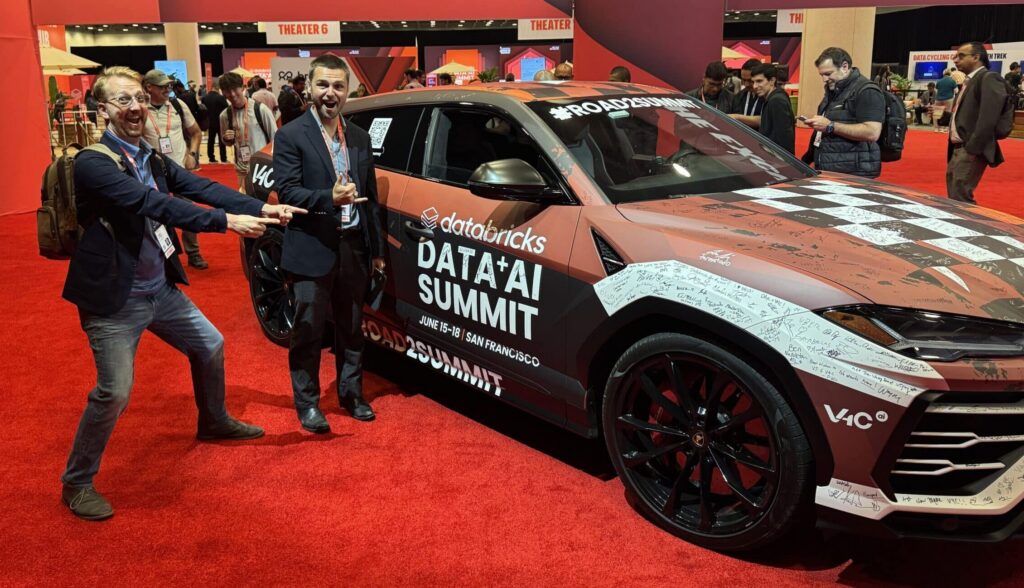
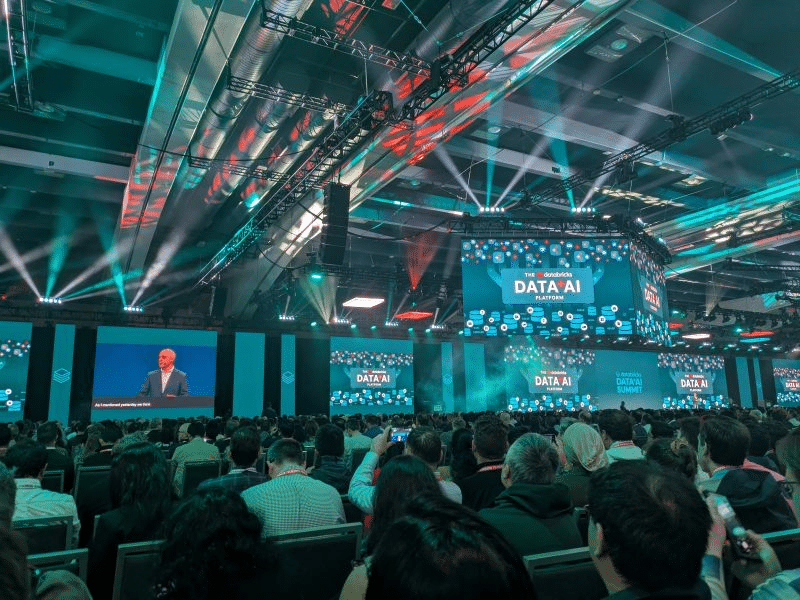
 Databricks Data + AI Summit 2026 made one message clear: enterprise AI is entering a new phase, and success will depend less on isolated pilots and more on governed, contextual platforms that can scale. The conference drew over 31,000 attendees from 174 countries, with industry leaders from Microsoft, OpenAI, and Anthropic presenting alongside Databricks across more than 800 sessions. The central theme aligned with what our teams are seeing in the field: “Agent quality is a context problem.” For federal agencies, that message is especially relevant as AI programs move from experimentation toward production environments that require stronger governance, clearer accountability, and trusted data foundations.
The Highlights
Genie One & Genie Ontology
Databricks introduced this package of tools designed to increase organizational efficiency with AI in your business context. Genie One is an AI assistant built for business users, not data engineers. It answers natural language questions, generates reports, drafts documents, schedules tasks, and can take action across your data through MCP tools. Empowering it is Genie Ontology, a self-improving context layer that continuously learns your organization’s business semantics and ensures agents are working from an accurate, governed understanding of your data.
Omnigent
A meta-harness designed to sit above existing agent frameworks, Omnigent has now been open-sourced under the Apache 2.0 license. Rather than replacing what teams are already using, it adds an orchestration layer that lets organizations mix and match frameworks, enforce cost limits and security policies across agent sessions, and share live sessions across teams. Databricks CTO Matei Zaharia described it on stage as a “harness of harnesses” – built out of necessity after Databricks’ own engineering team found itself managing multiple agents simultaneously with no unified control layer.
Expanded Agent Bricks Platform
Building on last year’s launch, Agent Bricks is now a more comprehensive developer platform for building and deploying autonomous agents. It supports any agent harness and frontier model, and handles the infrastructure overhead – deployment, scaling, security, cost tracking – allowing developers to focus on building rather than managing systems.
Real-Time Data with LakehouseRT and Reyden
Databricks unveiled LakehouseRT, powered by a new query engine called Reyden, designed for ultra-low latency analytics directly on Delta Lake data. The practical benefit is that organizations can query live operational data without building and maintaining separate ETL pipelines to move data into an analytics layer. For teams that need agents to act on current information rather than yesterday’s batch, this is a meaningful architectural shift.
Unity Catalog Expansion and Governance
Databricks made several additions to Unity Catalog to support more governed AI deployments, including Unity Catalog Metrics, Unity AI Gateway, and Catalog Federation. The Unity AI Gateway in particular addresses a growing challenge – governing not just data access, but the AI agents and models interacting with that data, including cost visibility, spend controls, and security policy enforcement.
Our Pick for the Standout Announcement: Genie One
 After reviewing the announcements from DAIS 2026, our team agreed that Genie One stood out as the most compelling launch because it best captured the conference’s central message: enterprise AI becomes useful when it is grounded in business context, governed data, and practical workflows.
The rest of the announcements were important, but Genie One rose to the top because it brings together three priorities that matter for teams trying to move AI from experimentation into real operations:
- It supports stack consolidation. By bringing the user experience into the Databricks platform, Genie One reinforces the broader trend from the summit: fewer disconnected tools, fewer handoffs, and less context lost between systems.
- It makes self-service analytics more realistic. The promise is not just easier access to data, but more confident access to governed answers that business teams can actually use in their day-to-day decisions.
- It is a serious step toward agentic BI. Among the announcements, Genie One most clearly showed how BI is shifting from static dashboards toward conversational, action-oriented workflows grounded in enterprise context.
Genie One was our team’s winner because it translated the summit’s big themes into the clearest business-facing example of where Databricks appears to be headed: governed, contextual AI that helps teams move from insight to action.
Our Takeaway – Databricks as the “Whole Package”
What stood out to our team at DAIS was not any single launch, but how many previously separate line items in a data budget are becoming Databricks features. The platform is starting to look less like a lakehouse with add-ons and more like a full replacement for the surrounding tool stack.
 Take governance. Unity Catalog’s new Business Glossary, Domains, and Metrics capabilities do a lot of what organizations have historically paid additional vendors for: authoritative definitions, business-aligned data categorization, and governed KPI objects that stay consistent across dashboards and agents. The difference is that it’s native to the platform your data already lives in, rather than a separate system you have to keep in sync.
The same pattern shows up in data engineering. Lakeflow Designer now gives non-engineers a drag-and-drop, natural-language way to build pipelines — but critically, every pipeline it generates is a real, editable Spark Declarative Pipeline underneath. That’s not a black box; a data engineer can open it and modify the code directly. Combined with Lakeflow Connect’s growing connector library, it’s a credible internal alternative to standalone ETL tools for a lot of common use cases.
Then there’s the agent layer. Genie One is Databricks’ clearest bid to reduce reliance on external AI assistants and BI tools — it drafts documents, generates reports, schedules tasks, and takes action across governed data, all without a separate chatbot layer bolted on top. And for teams running multiple coding agents side by side, Omnigent is the piece that ties it together: an open-source “harness of harnesses” that lets you mix frameworks like Claude Code, LangGraph, or CrewAI under one set of cost and policy controls, instead of managing each one separately.
The caveat is that “native” does not yet mean “industry best” across the board. But the direction is unmistakable: Databricks is not just adding features, it is absorbing categories. We are excited to see how the industry adopts this direction and what impact it has on existing systems.
Final Thoughts on Databricks Data + AI Summit 2026
DAIS 2026 reinforced a theme that carried through every major announcement: AI value depends on the context, governance, and architecture underneath it. Genie One, Omnigent, LakehouseRT, and Unity Catalog point in the same direction — away from disconnected tools and toward integrated platforms where data, semantics, agents, and controls work together. For federal agencies, that shift is promising, but it also raises the bar. These tools will only deliver if the underlying data strategy is clear, governed, and built for scale.
Our takeaway for readers is simple: the future of enterprise AI is not just about adding smarter tools; it is about building the trusted foundation those tools need to operate responsibly. At Analytica, we help agencies put that foundation in place — connecting governance, data engineering, analytics, and AI enablement so new capabilities can move from conference announcement to mission impact.